

Pre-Summit Panel Preview on “From Brain Drain to Brain Gain: Powering your Talent Strategy with Good University Relations”
Ahead of this session at our Annual Talent Attraction Summit, we asked some of our panelists to preliminarily share some of their perspectives on a region's opportunity to retain students after graduation. Katie Shorey (Live + Work in Maine) and Amy Monin (University at Buffalo) are ready to get the conversation started, and offer a preview of the ideas, challenges, and opportunities attendees can expect to talk about during this collaborative discussion!
Turn a transition point for a graduate into a growth strategy for your community
Amy Monin, the Strategic Initiatives Director at University at Buffalo, understands that many students underestimate the breadth of industries, startups, and leadership opportunities that exist locally. What helps them stay is meaningful connection early on through internships, mentorship, hands-on experiences, and relationships with employers who invest in them before graduation. When students can picture a future where they went to school, they are much more likely to build one there.
“Graduates often leave because they do not see a clear pathway to opportunity, community, or growth in the region.”
Above: Amy led a group of students to watch the 43North finals, a global business competition in Buffalo, New York!
Katie Shorey, Director of Engagement at Live + Work in Maine, also experiences the same challenges of retaining graduates. This stems from a lack of exposure to information and examples while in school, and also because the adults in their lives (including teachers) are unaware of the opportunities available.
“Many young people, especially those who grew up in rural areas, can be unaware of the types of careers and employers available to them in-state.”
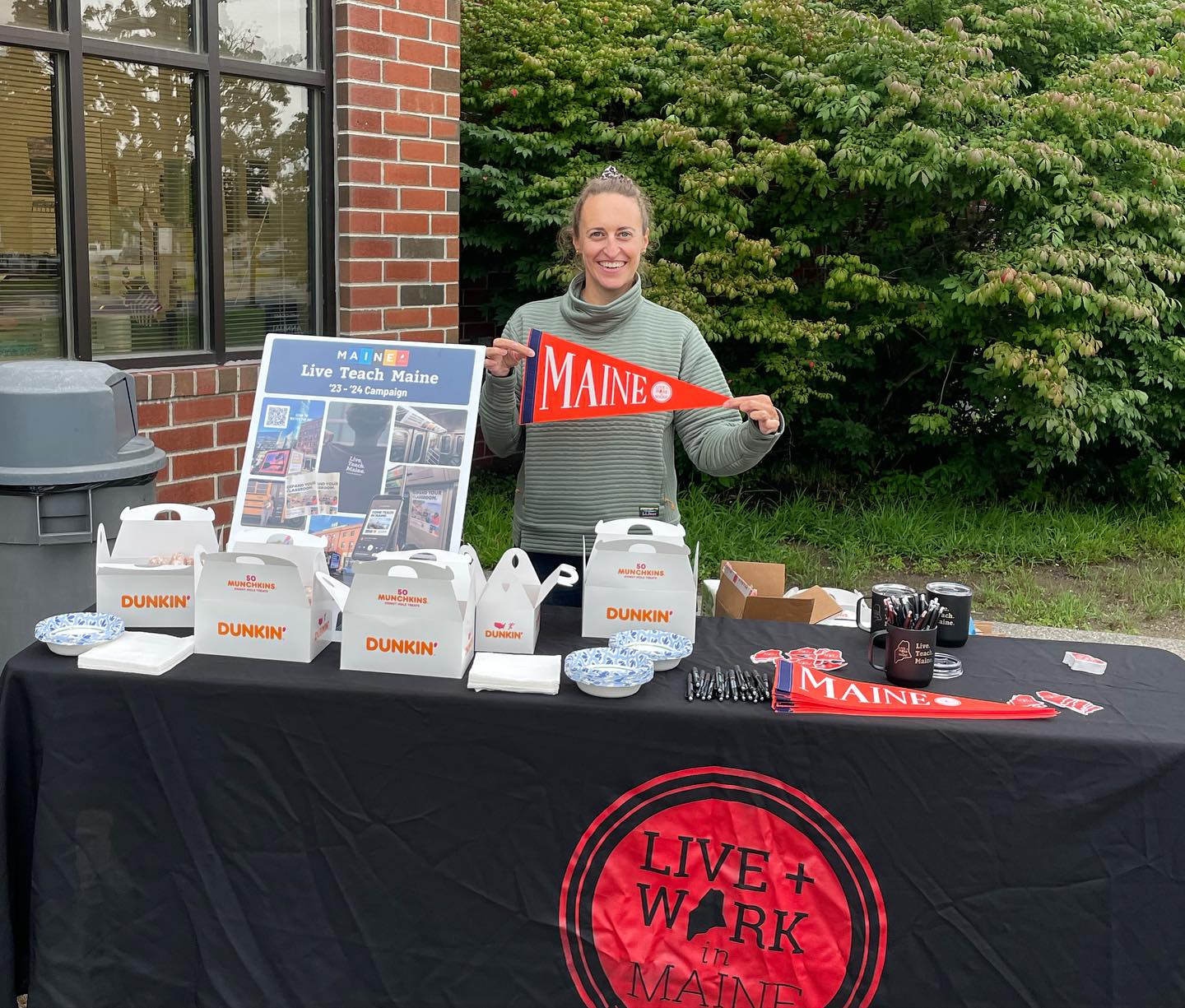
Above: Katie working the informational booth connecting with students in Maine.
Risks of NOT retaining talent from your local colleges and universities
When regions fail to retain university talent, they lose future innovators, civic leaders, entrepreneurs, and workforce capacity. Universities are producing incredible talent, but if communities are not intentional about connecting students to local opportunity, other cities will.
“The long-term risk is not just economic. It is losing momentum, creativity, and the next generation of people who could shape the region’s future.” - Amy Monin (Buffalo)
Young people will take their talents to other states when they could have stayed for a meaningful career. This also impacts businesses that are trying to grow. Communities anticipating their local workforce needs, know their employers need a pipeline of talent.
Examples of how Buffalo, NY and the state of Maine are retaining graduates
In Buffalo, they have a Sophomore Externship Experience program to engage students much earlier in their career journey. By connecting students to Western New York employers, community leaders, and peer cohorts early, they help them develop a sense of belonging and possibility in the region. Buffalo isn’t just working to place students into jobs. They are helping students build relationships with a community, and make it home.
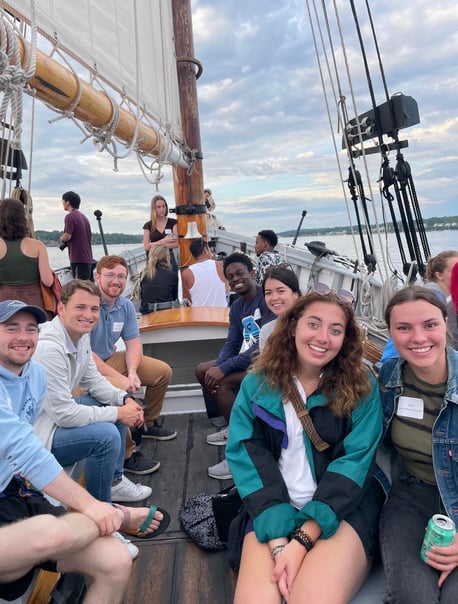 Above: Students from the summer Maine Career Catalyst program.
Maine is also formalizing programs to retain graduates. Maine Career Catalyst by Educate Maine, is a free program for interns and employers that provides professional development opportunities, networking, social outings, and exposure to other employers and industries.
 Above: Live and Work in Maine collaborates with on-campus career centers to host pop-up events where we bring employers to the students.
A newer program Maine launched is their FREE Community College Initiative for all high school graduates which helps guide students into various career paths and embeds them in the state. The state also has the Student Loan Repayment Program, which is a yearly $2,500 tax credit for anyone with student loans who lives and works in Maine (limit $25,000). It's a financial incentive that helps keep people in Maine, or encourages them to move to Maine.
When universities and communities operate as one talent system
Professional opportunity matters, but so does feeling like you belong and can make an impact. When students develop authentic relationships with mentors, employers, founders, and peers in a region, they begin to envision themselves building both a career and a life there.
Above: Celebrating the people and efforts that are a part of Live + Work in Maine!
“Connection and community have a big impact. Students stay where they feel seen, supported, and able to grow.” - Amy Monin (Buffalo)
When a city becomes a talent-retaining ecosystem, students stop viewing the region as a temporary stop and start seeing it as a place where they can thrive long-term. Employers become more collaborative, opportunities become more visible, and young professionals become active participants in shaping the community. You also start to see a stronger cycle of innovation. Graduates stay, launch companies, mentor the next generation, and continue reinvesting in the region’s future.
Dive deeper into bold ideas and proven strategies at the Talent Attraction Summit
Graduating talent represents one of the most important, and often overlooked opportunities, for communities focused on long-term economic growth. As universities continue to serve as powerful engines of talent, innovation, and workforce development, the real challenge for economic developers is not just attracting students, but creating the conditions that encourage them to stay, contribute, and build their futures locally.
This was a preview of what you can expect to dive into at the Summit with Katie and Amy, but Shannon Allen, the Executive Director from Future Talent Strategies at Innovate Alabama will also chime in with her insight! This will be an innovative discussion exploring how stronger partnerships between higher education and economic development can transform the transition from campus to career into a strategic advantage for communities. Katie, Amy, and Shannon will share deeper insights on retaining graduates, engaging alumni, and strengthening employer connections that turn short-term learners into long-term residents.
 Sign up for our upcoming RoleCall webinar, "Turn Student Retention into Long-Term Workforce & Economic Growth," on Tuesday, August 11th at 11:00am CST. Learn how the new, WayFindersU, student and graduate retention solution, helps communities strengthen their workforce by connecting emerging talent with local opportunities, employers, and support networks. Attendees will better understand their opportunity with the program to help turn students into long-term residents, professionals, and community leaders.